
PVC-O Technology
Why is the OPVC pipe extrusion production line much more expensive than the PVC pipe extrusion production line?
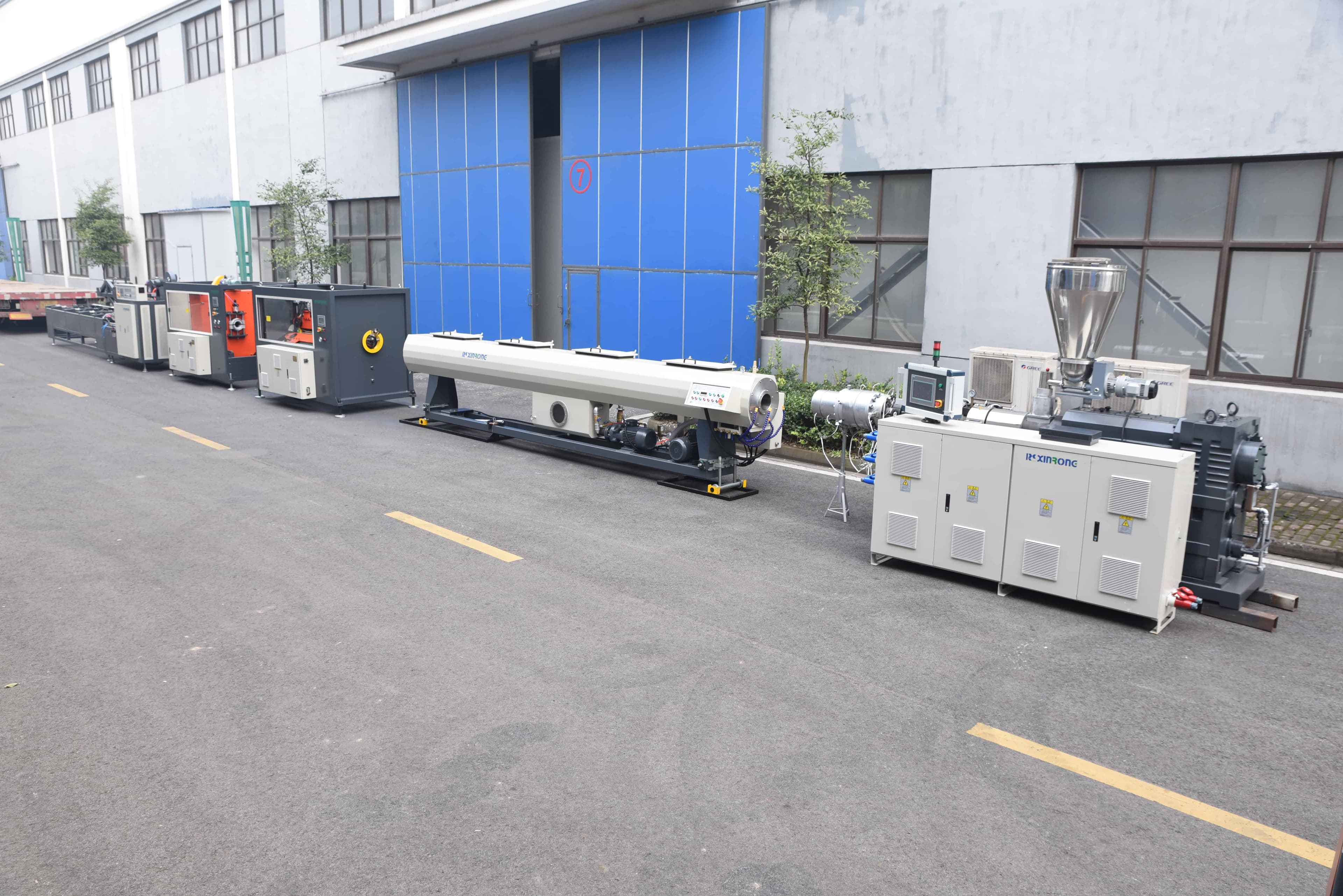
The OPVC (Oriented Polyvinyl Chloride) pipe extrusion production line is significantly more expensive than a standard PVC pipe extrusion line due to differences in production process complexity, equipment requirements, and technical barriers. Below is a detailed analysis:
The OPVC (Oriented Polyvinyl Chloride) pipe extrusion production line is significantly more expensive than a standard PVC pipe extrusion line due to differences in production process complexity, equipment requirements, and technical barriers. Below is a detailed analysis:
1. More Complex Material Processing Orientation Process : OPVC pipes require stretching (uniaxial or biaxial orientation) to align PVC molecular chains, enhancing mechanical properties (e.g., strength, pressure resistance). This necessitates additional equipment like axial stretchers, radial expanders, and precise temperature control systems, increasing both complexity and costs. Multi-Stage Processing : Standard PVC pipes are formed through single-step extrusion, while OPVC requires post-extrusion processes like stretching, annealing, and cooling, extending the production line and requiring more equipment.
2. Higher Equipment Specifications Extruders and Dies : OPVC demands extruders with tighter temperature control, specialized screw designs (to manage shear stress and prevent degradation), and dies engineered to accommodate dimensional changes during stretching. Stretching and Calibration Equipment : High-precision servo motors, tension control systems, and synchronized cooling units are essential for uniform molecular orientation. These advanced components significantly raise costs. Temperature Control Systems : Multi-zone temperature control is critical for stretching and annealing, increasing energy consumption and maintenance costs.
3. Technical Barriers and R&D Investment Proprietary Technology : Core OPVC processes (e.g., stretch ratios, temperature profiles) often involve patented technologies, requiring licensing fees or higher R&D investment from equipment manufacturers. Customization : OPVC lines are typically tailored to specific applications, unlike standardized PVC equipment, driving up per-unit costs.
4. Market Scale and Demand Niche Applications : OPVC pipes are used in specialized fields (e.g., high-pressure water transmission, industrial pipelines), limiting market demand and preventing economies of scale. Operational Costs : Complex processes increase maintenance frequency and energy consumption (e.g., stretching/annealing), indirectly raising equipment prices.
5. Quality Control and Testing Costs In-Line Monitoring : OPVC performance relies on consistent orientation, necessitating advanced inspection systems (e.g., laser gauges, stress analyzers) to ensure product uniformity. Waste Reduction : Higher process complexity risks defects, requiring intelligent error-correction systems to minimize scrap rates, further increasing costs.
Summary The high cost of OPVC production lines stems from their intricate processes (stretching, annealing), precision equipment, customization, and limited market scale. In contrast, standard PVC lines benefit from mature, standardized processes and economies of scale. The price difference reflects fundamental technical and operational disparities, not merely material costs.