
PVC-O Technology
What is the difference between PVC-O pipe extruder machine and PVC pipe extruder machine?
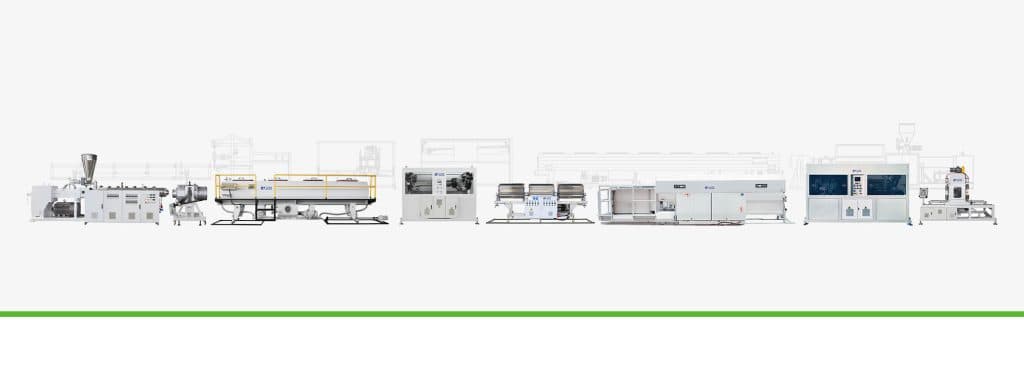
The main differences between PVC-O pipe extrusion equipment and traditional PVC pipe extrusion equipment lie in production processes and product performance.
The main differences between PVC-O pipe extrusion equipment and traditional PVC pipe extrusion equipment lie in production processes and product performance.
What is the difference between PVC-O pipe extruder machine and PVC pipe extruder machine?
Production Process & Product Performance PVC-O pipes produced by PVC-O pipe extruders are manufactured through a specialized biaxial stretching process (axial and radial stretching), which induces an oriented arrangement of PVC molecular chains in both directions. This results in a high-strength, high-toughness, high-impact-resistant, and fatigue-resistant PVC pipe with a layered structure. This unique structure enables PVC-O pipes to withstand brittle failures caused by micro-cracks in the material or surface scratches on the pipe wall, effectively preventing rapid crack propagation and enhancing overall performance and safety¹². In contrast, traditional PVC-U pipes produced by conventional PVC extruders undergo limited axial stretching during high-temperature processing, offering minimal improvement in material properties¹.
Application Fields PVC-O pipes are primarily used in water supply pipelines, mining pipelines, trenchless installation and rehabilitation pipelines, and gas pipelines, especially in harsh or corrosive underground environments with stringent safety requirements. They are not suitable for gravity-driven drainage systems¹. Traditional PVC pipes, however, are widely applied in drainage systems, electrical cable conduits, and similar fields.
Technical Parameters & Equipment Costs PVC-O pipe extrusion equipment typically demands higher technical specifications and involves more complex production processes, leading to elevated equipment costs. These advanced systems are designed to produce high-performance PVC-O pipes tailored for specialized applications¹.