Pipe Extrusion Guide
What Is an HDPE Pipe? Strength, Uses, and Benefits
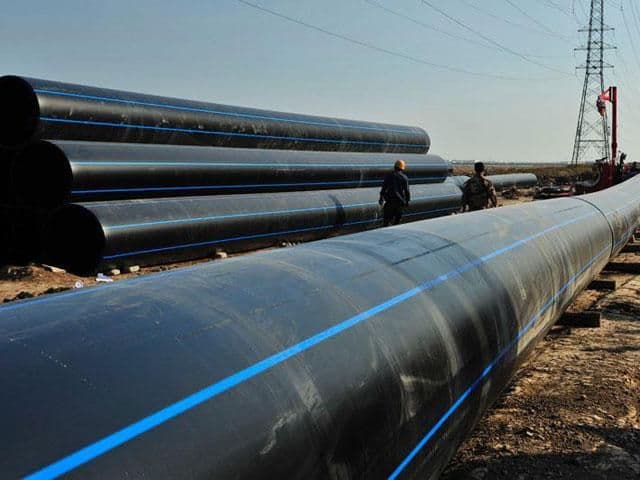
Ever wondered what keeps your city’s water flowing or your home safely supplied with gas? Behind the scenes, HDPE pipes—short for High-Density Polyethylene pipes—do the heavy lifting. They’re strong, flexible, and built to last, quietly shaping the invisible networks beneath our feet.
Ever wondered what keeps your city’s water flowing or your home safely supplied with gas? Behind the scenes, HDPE pipes—short for High-Density Polyethylene pipes—do the heavy lifting. They’re strong, flexible, and built to last, quietly shaping the invisible networks beneath our feet.
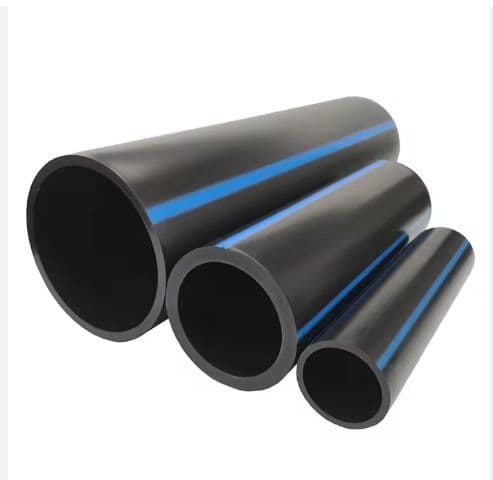
Made from a tough thermoplastic polymer, an HDPE pipe combines high strength with impressive corrosion and impact resistance. That’s why it’s trusted across industries—from water and sewage to gas and telecom systems.
In this article, we’ll break down what HDPE really is, how it’s made, Its advantages and disadvantages,and how it compares to other materials like MDPE and PVC. By the end, you’ll see why this polyethylene pipe has become the go-to solution for modern infrastructure.
HDPE Pipe: More Than Just a “Plastic Pipe”
Ever wondered what makes an HDPE pipe so tough and reliable? Don’t worry — you don’t need to be a chemist to get this. Let’s just take a simple look at what makes HDPE so durable.
“High-density” in High-Density Polyethylene isn’t just a fancy label. It describes how tightly its polymer chains are packed — imagine strands of spaghetti laid neatly side by side instead of tangled together. This dense molecular arrangement gives HDPE impressive strength, rigidity, and flexibility all at once.
At its core, HDPE is a type of polyethylene resin, a thermoplastic known for its chemical stability. This stability means HDPE won’t react with most acids, salts, or solvents, making the pipe exceptionally corrosion-resistant — perfect for carrying water, gas, or sewage without wearing out.
HDPE pipes also come in different grades, each suited for varying pressure demands:
* PE63 – Suitable for low-pressure systems. * PE80 – A balanced option for water and gas distribution. * PE100 – The premium grade, built for high-pressure, long-life applications.
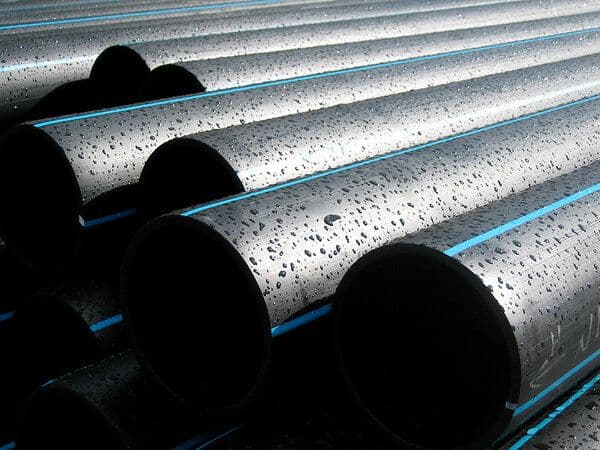
So yes, that smooth black HDPE pipe under the ground is more than “just plastic” — it’s precision-engineered durability, molecule by molecule.
From Pellets to Pipeline: The Production Journey of HDPE Pipe
Yes, your water line starts as a handful of tiny plastic pellets. It’s hard to imagine, but these little granules are the starting point of every HDPE pipe, soon transformed by precision engineering into durable pipelines.
The process begins with polymer melting. Raw HDPE pellets are fed into a plastic pipe extrusion machine, where heat and pressure turn them into a smooth, molten mass. This step ensures the polymer is fully blended and ready for shaping.
Next, the molten material is pushed through an extrusion die, forming a continuous tube. The hot pipe then passes through a calibration and cooling system, including vacuum tanks and water baths, which set its final diameter and uniform wall thickness. This ensures the pipe can withstand internal pressure without deforming.
High standards of quality control are critical. Online sensors monitor wall thickness in real time, while pressure and leak tests verify structural integrity. This is how manufacturers ensure every HDPE pipe meets performance specifications. It’s also where advanced equipment shines — delivering precision and consistency that manual processes can’t match.
If you’re curious about how HDPE pipe is made, you’ll be amazed at the role modern extrusion technology plays. At Xinrongplas, we design and build advanced HDPE pipe extrusion lines that guarantee efficiency, consistent quality, and precision from raw pellets to finished pipelines — turning small granules into high-performance infrastructure.
The Trump Card Advantages of HDPE Pipes: Strength, Lifespan, and Weather Resistance
HDPE pipes are durable, flexible, and highly resistant to chemicals, making them a top choice for modern infrastructure.
Exceptional Strength — Can HDPE Handle High Pressure?
Yes, HDPE pipe is exceptionally strong and resists impacts and high pressures.
Tightly packed polymer chains give it high tensile strength and burst pressure resistance. Pressure ratings range from PN10 to PN25, and it operates safely from −40°C to 60°C. Unlike PVC, it flexes under stress without cracking.
This makes HDPE ideal in earthquake-prone areas and unstable soils, reducing leak risks.
Strength and flexibility make HDPE reliable, setting the stage for long-term performance.
Ultra-Long Lifespan — How Long Will It Last?
Yes, HDPE pipe can last 50–100+ years under proper conditions.
Environmental stress crack resistance and good fusion quality ensure decades of performance. UV exposure, water quality, and pressure affect life, but proper installation extends it well beyond 50 years.
Long service life lowers maintenance and life-cycle costs, ideal for municipal or industrial pipelines.
Its longevity complements strength, making HDPE a reliable long-term solution.
Chemical & Weather Resistance — Is HDPE Waterproof?
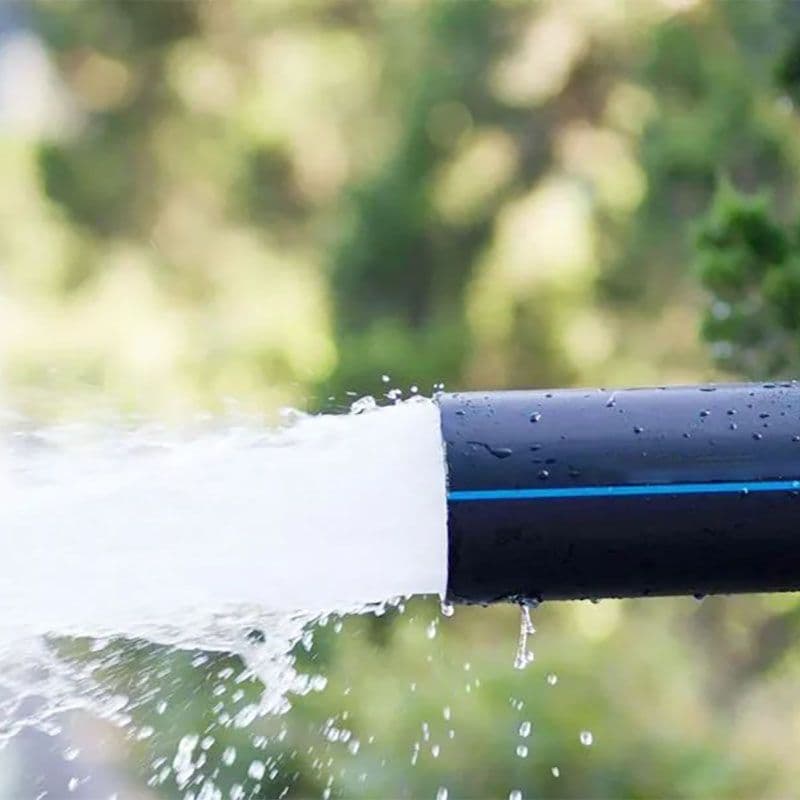
Yes, HDPE pipe resists corrosion and moisture effectively.
Its chemical inertness, low permeability, and UV stability prevent degradation from acids, salts, or sunlight.
Perfect for water, sewage, and chemical transport, reducing leaks and contamination risks.
Combined with strength and longevity, HDPE’s resistance makes it a trusted global standard.
The Other Side of the Story —The Limitations of HDPE
While HDPE pipe offers many advantages, it’s important to look at its limitations objectively. Knowing these helps engineers plan smarter and ensures long-term reliability.
Temperature Sensitivity
HDPE has a lower high-temperature tolerance, which means it can soften under prolonged exposure to hot water or extreme heat. Selecting temperature-rated grades helps maintain strength and ensures safe operation.
Thermal Expansion
HDPE expands and contracts significantly with temperature changes. To prevent stress or deformation, engineers often incorporate expansion loops or flexible joints in the pipeline design.
Installation Requirements
Proper installation is essential, as skilled personnel and correct fusion techniques are needed to ensure strong joints. Following standardized procedures minimizes the risk of leaks and maintains long-term performance.
Buoyancy and Floatation
Whether an HDPE pipe floats or sinks depends on wall thickness, density, and site conditions. Proper anchoring or weighting can prevent unwanted movement in waterlogged or shallow installations.
UV Exposure
Extended sunlight can gradually degrade HDPE’s surface. Burying pipes or using UV-resistant co-extruded layers helps protect against damage while preserving long-term durability.
In short, these disadvantages of HDPE—temperature limits, thermal expansion, installation demands, buoyancy, and UV sensitivity—are manageable with careful planning and appropriate engineering choices, allowing HDPE pipe to perform reliably for decades.
MDPE vs HDPE: How to Choose Based on Lifespan and Application?
Choosing between HDPE pipe and MDPE doesn’t have to be confusing. Here’s a clear, side-by-side look at how they differ and where each shines.
Quick Comparison
|Feature |HDPE Pipe |MDPE Pipe | | --- | --- | --- | |Density & Structure |Higher; tightly packed polymer chains |Medium; slightly looser polymer chains | |Pressure Rating |High (PN10–PN25) |Moderate | |Flexibility |Moderate |High | |Lifespan |50–100+ years |~30–50 years | |Typical Applications |High-pressure water lines, long-term infrastructure |Mid-pressure gas lines, projects requiring pipe bends | |Cost |Higher |Lower |
Understanding the Material
Think of HDPE like a bundle of smooth, untangled ropes that can be tied very tightly — this represents its high crystallinity and density, giving it superior strength and pressure resistance. MDPE, in contrast, is like a bundle of ropes with some small knots, which can’t be tied as tightly — reflecting its lower crystallinity and medium density, making it more flexible but less pressure-resistant.
What This Means in Practice
* HDPE: Strong, durable, built for high-pressure or long-term water and industrial pipelines, less flexible, ideal for straight runs or gentle curves. * MDPE: Flexible and cost-effective, suited for gas distribution or areas needing bends, but with lower pressure tolerance and shorter lifespan.
Decision Tip
If your project requires high pressure, long life, and low maintenance, go with HDPE. If flexibility and budget are more important for moderate-pressure applications, MDPE is the practical choice.
Conclusion
HDPE pipe stands out for its remarkable combination of toughness, longevity, and resistance to chemical and environmental stress. Its reliability under pressure, flexibility in installation, and minimal maintenance requirements make it a high-performing solution that consistently delivers over decades.
From water supply and gas transmission to agriculture irrigation and cable protection, HDPE has proven itself across diverse sectors. Its widespread adoption highlights why it has become the industry standard for modern piping projects worldwide.
In short, HDPE isn’t merely a choice; it defines excellence in piping. Durable, adaptable, and sustainable, it’s the material engineers trust again and again — a true benchmark in the world of modern infrastructure.
FAQ: HDPE Pipe Insights
Q1: Does HDPE sink or float?
It depends on wall thickness, density, and installation conditions. Pipes may float in water if buoyancy isn’t properly accounted for, so proper anchoring or weighting is important in waterlogged areas.
Q2: What material is 100% waterproof?
While no material is truly 100% waterproof, HDPE has extremely low moisture absorption and acts as an excellent barrier against water, making it ideal for pipelines.
Q3: Is HDPE recyclable?
Yes, HDPE is highly recyclable. It can be reprocessed into new pipes, plastic products, or pellets, supporting sustainability and reducing environmental impact.
Q4: How is HDPE different from PVC and MDPE?
HDPE offers higher density, greater pressure ratings, and longer lifespan. MDPE is more flexible and lower cost, suitable for mid-pressure applications. PVC is stiffer but more brittle, often used for drainage and low-pressure systems.
Q5: Can HDPE pipe be used for hot water?
HDPE has a lower high-temperature tolerance, so it can handle moderately warm water but isn’t suitable for prolonged exposure to very hot water. Use temperature-rated grades for safe applications.
Related Images