Pipe Extrusion Guide
Automatic Pipe Drilling & Slotting Machines: Post-Extrusion Automation for Maximum Efficiency
In the fast-paced world of plastic pipe manufacturing, post-extrusion automation has become a game-changer. Automatic pipe drilling machines and automatic pipe slotting machines represent the pinnacle of efficiency, transforming raw extruded pipes into precision-engineered products ready for diverse
In the fast-paced world of plastic pipe manufacturing, post-extrusion automation has become a game-changer. Automatic pipe drilling machines and automatic pipe slotting machines represent the pinnacle of efficiency, transforming raw extruded pipes into precision-engineered products ready for diverse applications like drainage, irrigation, filtration, and infrastructure. These machines minimize manual intervention, reduce waste, enhance consistency, and boost throughput — all critical factors in today’s competitive manufacturing landscape.
The Role of Post-Extrusion Automation in Modern Pipe Production
Pipe extrusion is the foundational process where molten polymer (PVC, HDPE, PE, or PP) is forced through a die to create continuous tubing. However, the real value addition occurs post-extrusion. Traditional manual drilling or slotting is labor-intensive, inconsistent, and prone to errors. Automatic pipe drilling machines and automatic pipe slotting machines integrate seamlessly into extrusion lines, performing operations inline or offline with high precision. These systems handle pipes ranging from small diameters (20-110mm) to large industrial sizes (up to 1200mm+), processing materials at speeds that manual methods simply cannot match. By automating hole punching, slot cutting, and perforating, manufacturers achieve uniform patterns essential for applications requiring controlled fluid flow or structural integrity.
Key SEO keywords integrated here include automatic pipe slotting machine, automatic pipe drilling machine, post-extrusion automation, PVC pipe slotting, HDPE perforated pipes, and more.
How Automatic Pipe Drilling Machines Work
Automatic pipe drilling machines are engineered for precision hole creation. They typically feature:
* Conveyor or haul-off integration : Pipes move continuously from the extrusion line. * Multi-spindle drill heads : Allow simultaneous drilling at various angles and positions. * CNC or PLC control systems : Programmable for custom patterns, depths, and spacings. * Servo motors and sensors : Ensure exact positioning and real-time adjustments. * Dust extraction and cooling systems : Maintain clean operations and prevent material deformation.
For example, systems like the Kentucky Gauge KDP or Baruffaldi drilling units can process aluminum, steel, PVC, and composites with skip-feed capabilities for hollow sections, dramatically reducing cycle times.
Nuances and Edge Cases: Drilling thin-walled pipes requires careful pressure control to avoid cracking. Larger pipes may need dual-station setups for balanced processing. Materials like HDPE demand specific bit geometries to handle flexibility without deformation.
Automatic Pipe Slotting Machines: Precision Grooving for Functionality
Automatic pipe slotting machines specialize in creating longitudinal or circumferential slots. These are vital for drainage pipes, well screens, and filtration systems where water inflow or outflow must be optimized. Typical features include:
* High-speed rotating blades or milling heads with burr-free cutting. * Automatic pipe rotation and feeding mechanisms. * Adjustable slot width (1-10mm), length, and spacing. * Integration with vision systems for quality inspection.
Applications:
* Agricultural drainage and irrigation. * Cable protection conduits. * Geothermal and water well screens. * Industrial filtration systems.
Perforated and slotted pipes enhance permeability while maintaining structural strength.
Benefits of Investing in These Machines
* Maximum Efficiency and Throughput : Cycle times drop significantly. Inline integration eliminates storage and handling between processes. * Labor Cost Reduction : One operator can oversee multiple lines, shifting workforce to higher-value tasks. * Superior Quality and Consistency : Automated controls ensure every pipe meets exact specifications, reducing rejects. * Material Savings : Precise operations minimize waste compared to manual methods. * Flexibility : Quick changeovers for different pipe diameters and patterns via touchscreen interfaces. * Safety Improvements : Enclosed operations and sensors reduce workplace accidents. * Scalability : Suitable for SMEs to large-scale producers, with modular designs.
Integration with Extrusion Lines: Seamless Post-Extrusion Automation
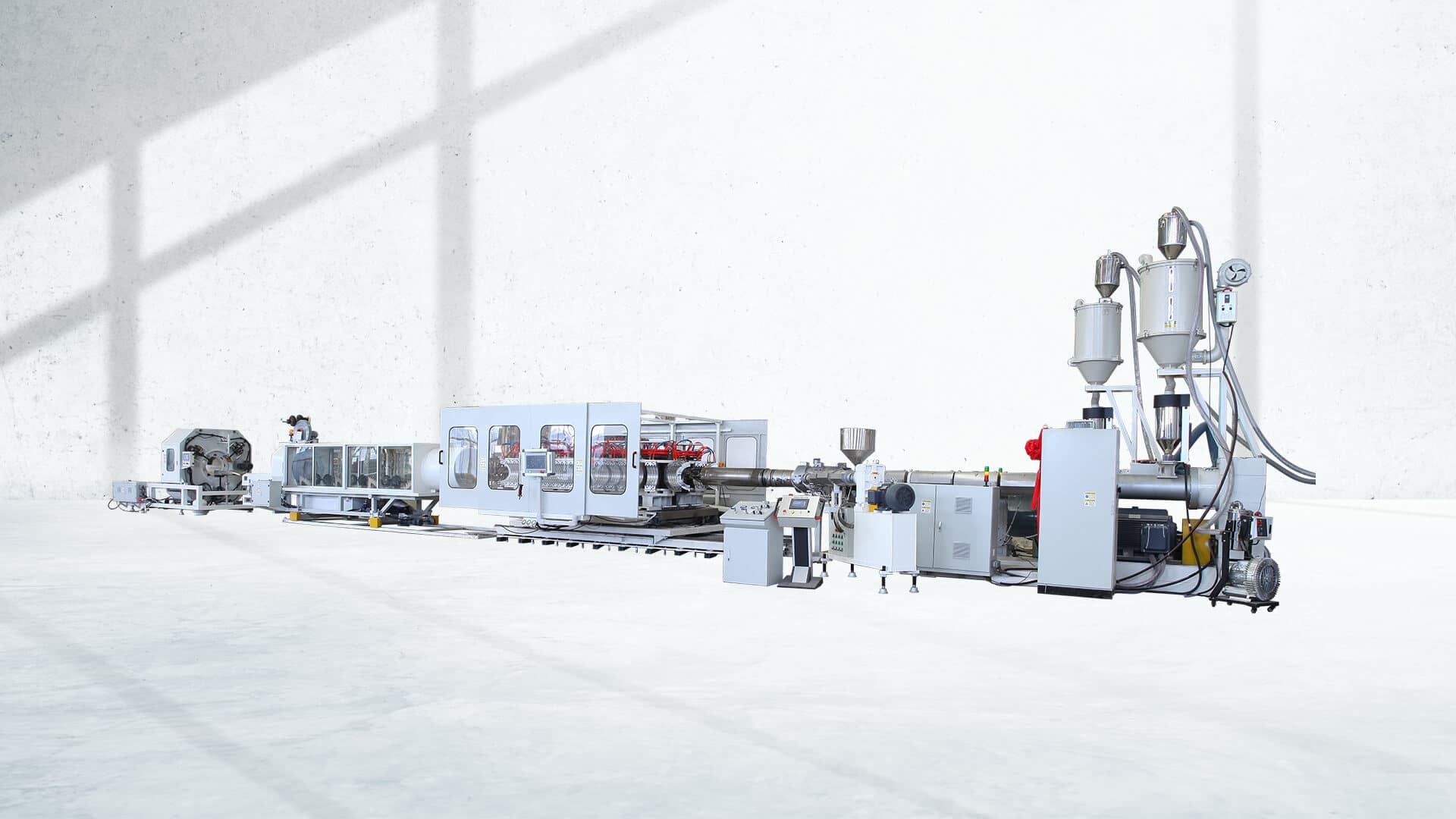
Modern post-extrusion automation connects drilling/slotting units directly after cooling and haul-off stages. PLC/HMI systems synchronize speeds, monitor quality, and provide data analytics for predictive maintenance.
Related Considerations:
* Cooling must be complete to prevent deformation during machining. * Dust and chip management is crucial for plastic pipes to avoid contamination. * Hybrid lines combining drilling, slotting, cutting, and marking in one flow.
Edge cases include handling corrugated pipes (requiring specialized supports) or co-extruded multi-layer pipes (needing depth-controlled operations).
Industry Applications and Case Studies
In agriculture, automatic pipe slotting machines produce drainage pipes that prevent waterlogging while allowing root aeration. Infrastructure projects use drilled HDPE pipes for cable ducts and gas distribution. A hypothetical case: A manufacturer upgrading from manual to automatic systems increased daily output by 300%, reduced labor by 70%, and improved product uniformity, leading to new contracts in export markets. Nuances: Regulatory compliance (e.g., NSF, ISO standards for water pipes) is easier with automated precision.
Technological Advancements and Future Trends
* AI and Machine Learning : Predictive pattern optimization and defect detection. * Robotics : Fully autonomous loading/unloading. * Laser Integration : For ultra-precise, contactless slotting in sensitive materials. * Sustainability : Energy recovery systems and recyclable material compatibility. * Industry 4.0 : Remote monitoring and real-time production dashboards.
Challenges include high initial capital and the need for skilled technicians for programming and maintenance. However, leasing options and modular upgrades mitigate these.
Choosing the Right Automatic Pipe Drilling & Slotting Machine
Factors to consider:
* Pipe diameter range and material compatibility. * Required throughput and automation level. * Customization options for patterns. * After-sales support and spare parts availability. * Integration capabilities with existing lines.
Reputable suppliers offer turnkey solutions with training and warranties.
Conclusion: Embracing Automation for Competitive Advantage
Automatic pipe drilling machines and automatic pipe slotting machines are indispensable for manufacturers seeking post-extrusion automation for maximum efficiency. They deliver precision, speed, and cost savings while enabling high-quality outputs tailored to market demands. As the pipe industry evolves toward smarter, greener production, investing in these technologies positions businesses at the forefront. Whether for drainage solutions, industrial applications, or infrastructure, the future is automated — delivering consistent excellence pipe after pipe.
Related Images