
PVC-O Technology
Analysis of Core Technical Barriers in PVCO Pipe Extrusion Production Line
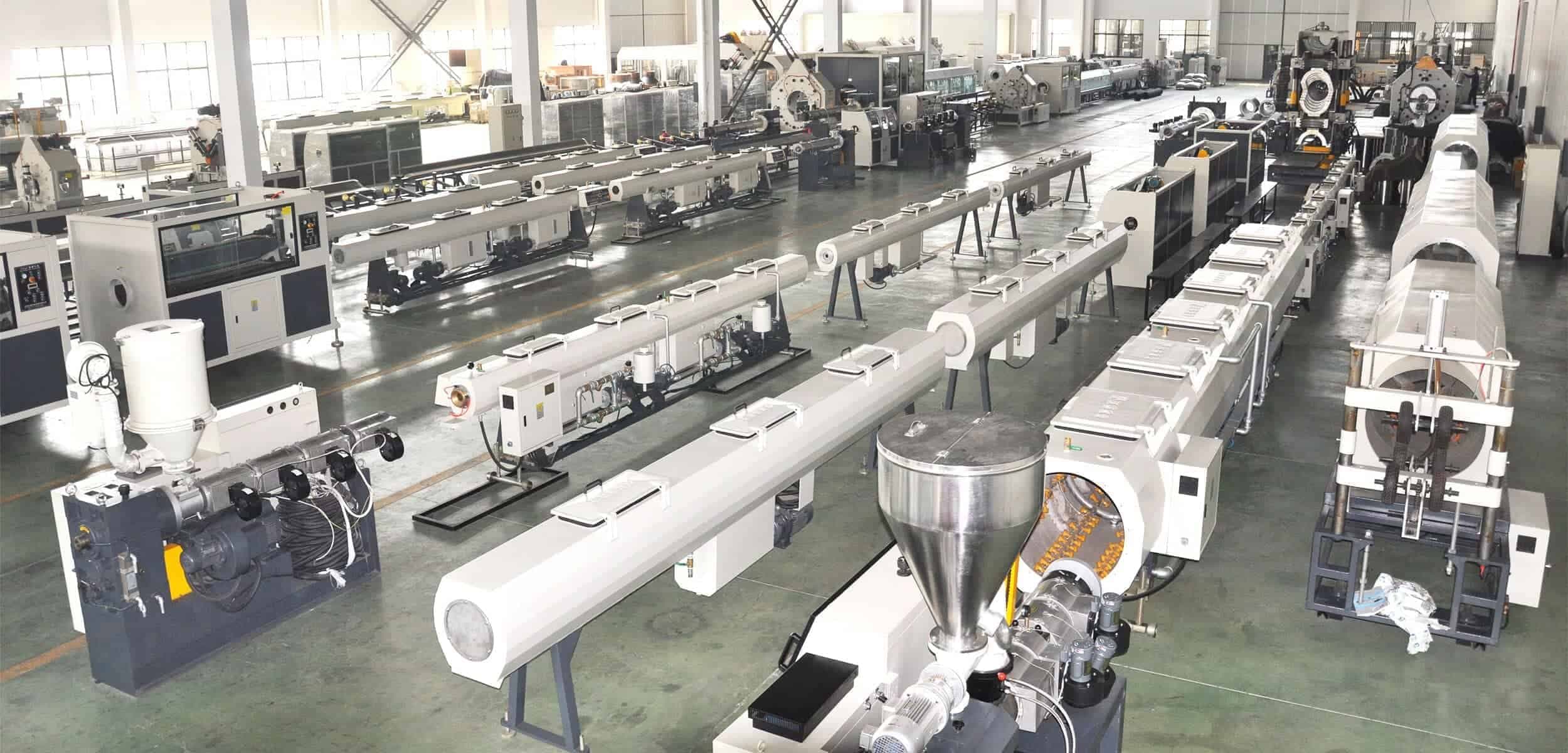
PVC-O (Polyvinyl Chloride Oriented) pipes are widely valued in water supply, drainage, and gas transmission systems due to their high strength, pressure resistance, and lightweight advantages. However, their complex manufacturing process imposes significantly higher requirements on equipment and tec
PVC-O (Polyvinyl Chloride Oriented) pipes are widely valued in water supply, drainage, and gas transmission systems due to their high strength, pressure resistance, and lightweight advantages. However, their complex manufacturing process imposes significantly higher requirements on equipment and technology compared to conventional PVC pipes. This article thoroughly examines six core technical barriers in PVC-O pipe extrusion production lines.
1. High-Precision Molecular Orientation Process Control Technical Challenges The performance of PVC-O pipes relies on bidirectional stretching to achieve molecular chain orientation, requiring synchronized axial and circumferential stretching within specific temperature ranges. - Temperature Sensitivity : Stretching temperature must be strictly maintained near the glass transition temperature (Tg) (80-90°C). Deviations exceeding ±2°C cause molecular chain breakage or insufficient orientation. - Stretching Rate Synchronization : Axial and circumferential stretching rates require dynamic balance. Conventional mechanical stretching equipment struggles to achieve <1% synchronization error. - Residual Stress Elimination : Post-stretching gradient cooling is essential to prevent pipe deformation from internal stresses. Industry Breakthrough: Implementation of infrared real-time temperature control systems with servo motor synchronization technology enables microsecond-level response in stretching rate adjustment.
2. Multi-Layer Co-Extrusion Technology Technical Challenges Advanced PVC-O pipes typically adopt a three-layer structure (core/adhesive/outer layers) with melt flow index differences controlled within 5g/10min: Layer | Function | Typical Materials | Thickness Tolerance Outer Layer | UV/Weather Resistance | PVC+ASA Blend | ±0.05mm Adhesive | Interlayer Bonding | Modified CPVC | ±0.02mm Core Layer | Pressure Bearing | PVC-O | ±0.1mm Key Equipment: - Multi-channel distribution die (flow rate difference <3%) - Melt gear pump (pressure fluctuation <0.5 bar)
3. Integrated Online Quality Monitoring Inspection Parameters & Accuracy: - Ultrasonic Wall Thickness Detection: 1mm axial resolution, ±0.03mm thickness accuracy - Real-Time Orientation Monitoring: Polarized light analysis with orientation factor (f) sensitivity of 0.01 - Laser Ovality Measurement: Roundness deviation detection limit 0.1% Technical Bottleneck: Traditional PLC systems cannot meet the 200ms response requirement for closed-loop control between detection data and extrusion parameters.
4. Energy-Efficient Extrusion System Design Energy Consumption Comparison: Process Stage | Conventional PVC (kWh/t) | PVC-O (kWh/t) Plasticizing | 180-200 | 220-250 Orientation Stretch | – | 80-100 Cooling & Shaping | 50-60 | 70-90 Innovative Solutions: - Electromagnetic induction heating (85% thermal efficiency) - Orientation section waste heat recovery (15-20% energy saving)
5. Precision Mold Flow Channel Machining Critical Parameters: - Die lip surface roughness: Ra≤0.2μm - Flow channel coating hardness: ≥HV1500 (DLC coating) - Cavity pressure balance deviation: <2% Manufacturing Challenges: Complex spiral flow channels require 5-axis machining centers (positioning accuracy ≤3μm) combined with EDM finishing. Mold costs account for 25-30% of total production line investment.
6. Long-Term Pressure Resistance Assurance Accelerated Aging Standards: - ISO 1167-1:2006: 25MPa hoop stress at 20°C for 50-year service life - Burst Pressure Test: ≥4×PN (nominal pressure) Technical Solutions: - Nano-CaCO₃ modification enhances environmental stress crack resistance - Bimodal molecular weight PVC resin (K-value 68-72)
Industry Development Trends - Intelligent Manufacturing : Digital twin technology optimizes parameters, increasing yield to >99.5% - Large-Diameter Pipes : DN1200+ production lines addressing die swell challenges - Sustainable Production : 30% bio-based plasticizers reducing carbon emissions by 40%
Overcoming these barriers requires sustained R&D investment. Domestic equipment is expected to match international standards in control accuracy and production speed (≥25m/min) within 3-5 years. Enterprises mastering these core technologies will dominate the global PVC-O market valued at $20 billion.